
First aid is one of those rare skills that can literally mean the difference between life and death. Whether you’re a parent, teacher, workplace manager, or just someone who wants to be prepared, knowing what to do in an emergency gives you the power to help when it matters most. But even if you’ve taken a first aid course before, it’s crucial to ask yourself: when was the last time you refreshed your training?
First aid knowledge can fade over time. Protocols evolve, best practices change, and confidence in using your skills can diminish if they’re not regularly practised. In this post, we’ll explore how often you should refresh your first aid training, why it matters, what the law says (especially in workplace settings), and how to keep your skills current and effective.
Why First Aid Skills Deteriorate Over Time
No matter how confident you felt after your initial course, it’s natural for first aid knowledge to fade. That’s because we tend to retain information we use frequently and forget what we don’t.
- Most people don’t use first aid daily, so memory of procedures weakens over time.
- Even core skills like CPR can become fuzzy after just a few months without practice.
- Confidence in delivering aid declines when you haven’t revisited the training.
- People often confuse or mix up steps in an emergency if their last course was years ago.
By refreshing your training regularly, you ensure that your knowledge remains accurate, your skills stay sharp, and you’re ready to act effectively when needed.
Legal and Workplace Requirements
In many cases, the frequency of refresher training isn’t just about best practice—it’s a legal requirement, especially in workplace environments.
- HSE (Health and Safety Executive) guidelines in the UK recommend a full first aid at work course every three years.
- Additionally, an annual skills refresher is strongly recommended to maintain competence.
- For paediatric first aid, Ofsted and EYFS regulations in the UK also specify a three-year cycle.
- Some sectors (e.g. construction, healthcare, education) may have more frequent internal policies for first aid certification.
Failing to stay up to date could have legal or insurance consequences, particularly if you’re responsible for others in the workplace or public settings.
Key First Aid Courses and Their Renewal Cycles
Different first aid qualifications carry different expectations when it comes to renewing or refreshing your training.
- Emergency First Aid at Work (EFAW): Valid for 3 years. One-day refresher recommended annually.
- First Aid at Work (FAW): Valid for 3 years. Annual skills refresher advised.
- Paediatric First Aid: Valid for 3 years. Common in early years and childcare settings.
- CPR and AED Training: Often advised to refresh annually due to technique sensitivity.
- Mental Health First Aid: Refreshers recommended every 3 years to stay current with updated practices.
Even if the qualification technically lasts for three years, you should consider annual refreshers to maintain confidence and stay up to date with any changes in protocols.
What’s Included in a First Aid Refresher Course?
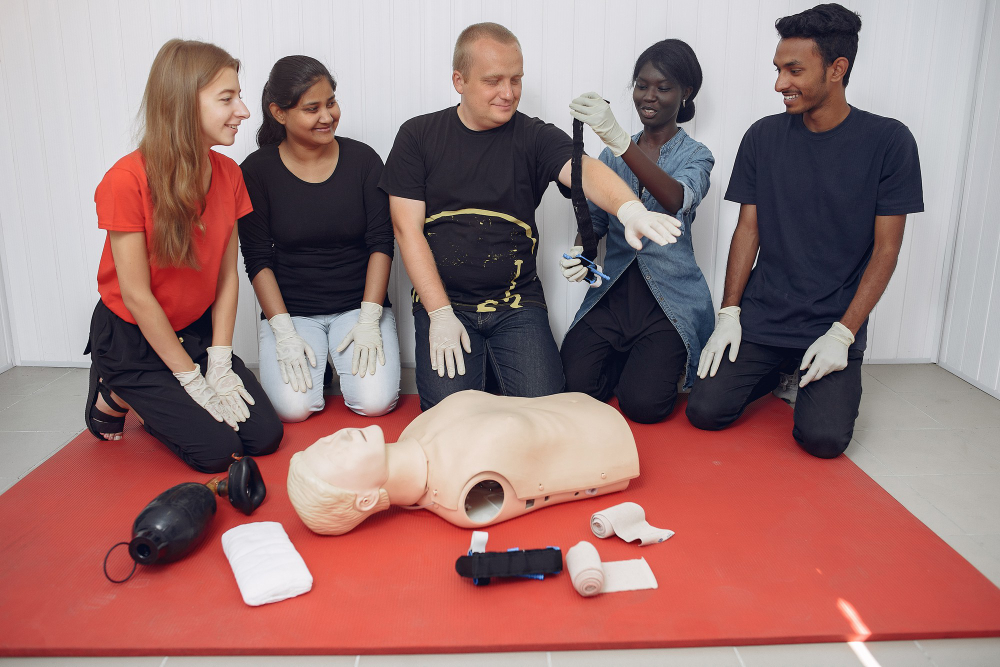
Refresher courses don’t simply repeat the entire training—they’re focused, practical, and designed to bring you back up to speed.
- Hands-on review of core lifesaving skills like CPR, choking response, and recovery position.
- Updates on new medical guidance (e.g. changes in resuscitation techniques or AED use).
- Scenario-based practice to rebuild confidence in real-life situations.
- Clarification of any changes to local laws, policies, or procedures.
- Optional modules depending on your industry (e.g. sports first aid, mental health support, outdoor environments).
These courses are usually shorter than the initial training but make a big difference in competence.
The Risks of Letting Certification Expire
Letting your first aid certification lapse might seem like a minor oversight—but it can have serious consequences.
- You may no longer be legally recognised as a first aider in your workplace.
- Employers may not be covered by insurance if untrained staff respond to incidents.
- In an emergency, outdated knowledge can lead to incorrect or unsafe care.
- You may panic or freeze instead of acting quickly and confidently.
If more than three years have passed since your last course, it’s highly advisable to take a full retraining course rather than a refresher to ensure you’re fully equipped again.
Benefits of Regular First Aid Refresher Training
Keeping your first aid knowledge current does more than just meet regulations—it ensures you’re genuinely ready to help.
- Boosts confidence: Regular training builds muscle memory so you don’t second-guess yourself.
- Improves response times: You’ll be more decisive and efficient in a real emergency.
- Protects others: You’ll be more capable of protecting co-workers, family members, or the public.
- Updates your knowledge: Medical guidance evolves—your training should too.
- Increases employability: Up-to-date qualifications are highly valued by employers.
Whether you’re a designated first aider or just want to help others, regular refreshers keep your skills life-ready.
How to Tell If You’re Due a Refresher
Sometimes you may not be sure whether it’s time to update your training. Here are a few signs that it’s probably time to refresh:
- You completed your last course more than a year ago and haven’t practised since.
- You can’t clearly remember all the steps of CPR or the recovery position.
- Your workplace has changed procedures or equipment.
- You’re unsure about what to do in specific scenarios (e.g. choking, burns, allergic reactions).
- You’re lacking confidence or feel uncertain about acting in an emergency.
If any of these apply, a refresher will be well worth your time.
What to Expect in the Latest First Aid Guidelines
Another reason for regular training is that best practices do evolve. In recent years, first aid guidelines have been updated in several key areas:
- CPR guidance: Chest compressions-only CPR is now an accepted alternative if mouth-to-mouth isn’t possible.
- Use of AEDs: Automated defibrillators are becoming more widely available and are taught in many courses.
- Bleeding control: Training now often includes how to use tourniquets or haemostatic dressings.
- Seizure management: Updated protocols highlight what not to do during a seizure.
- Mental health first aid: Growing awareness has led to inclusion of psychological support techniques.
Staying up to date means you’ll be trained in the most effective, legally safe, and evidence-based techniques available.
Refreshing First Aid Training for Different Groups
Different people may have unique needs when it comes to refreshing their training:
- Teachers and childcare workers: Must stay current with paediatric-specific first aid, especially for choking, asthma, and allergies.
- Sports coaches: Need to refresh on dealing with sprains, breaks, and heat exhaustion.
- Office workers: General first aid courses are often sufficient, with focus on fainting, burns, and cardiac issues.
- Construction and manual labour: Courses focus on trauma, bleeding, head injuries, and crush injuries.
- Outdoor instructors: Training includes environmental factors like cold exposure, bites, and remote care.
Choose a course or refresher that matches your role and the risks you’re most likely to encounter.
How to Schedule and Find the Right Course
Finding and booking a first aid refresher course is easier than ever thanks to online platforms and local training providers.
- Check with your employer—some workplaces schedule in-house training sessions.
- Search for accredited providers near you. Look for qualifications that are Ofqual-regulated or HSE-compliant.
- Book ahead—refreshers are often in high demand, especially in industries with mandatory compliance.
- Keep a digital or printed copy of your certificate and expiry date.
- Consider setting a calendar reminder for a year after your last session to review your readiness.
Staying proactive ensures you’re never caught off guard when your certificate expires.
Digital vs. In-Person Refreshers
Many providers now offer blended learning options, where theory is covered online and practical skills are taught in person.
- Blended learning allows for flexibility without sacrificing hands-on practice.
- Fully online refreshers may be acceptable for knowledge-only roles but aren’t suitable for most certifications.
- In-person training remains the gold standard for physical skills like CPR and choking response.
- Group sessions can be more engaging and simulate real-life scenarios better than solo online modules.
Choose the format that best suits your learning style and legal requirements.
Conclusion
Knowing first aid is one thing—being able to use it confidently when it matters is something else entirely. That’s why refreshing your first aid training isn’t just a recommendation—it’s a responsibility. Whether it’s for the safety of your colleagues, your family, or the general public, staying up to date ensures you’re ready to step up in those critical moments.
Aim to refresh key skills every year, and renew formal certifications every three years—or sooner if required by your role. In the end, the few hours spent in a refresher course could save a life. And there’s no more worthwhile investment than that.

5 star reviews

Vocational qualifications

Online video


REVIEWS