
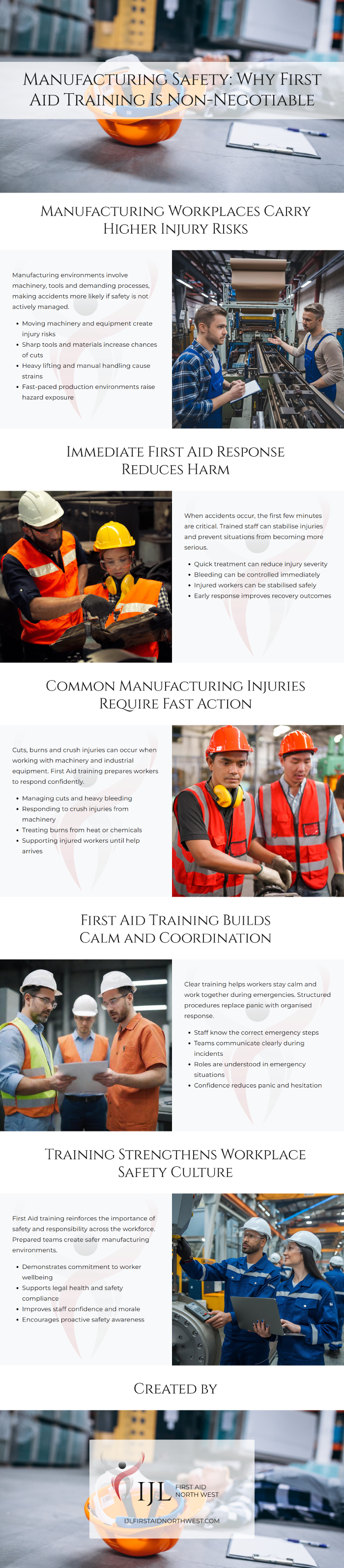
Manufacturing environments are among the most demanding workplaces when it comes to health and safety. Heavy machinery, moving parts, manual handling and complex production processes create a range of hazards that require constant attention. While preventative measures such as risk assessments and safety systems reduce the likelihood of incidents, accidents can still happen. In these moments, the ability to respond quickly and effectively is critical. First Aid training provides the knowledge and confidence needed to act immediately when injuries occur.
For manufacturing businesses, First Aid training is not simply a regulatory requirement. It is a practical and essential component of workplace safety. When employees are trained to recognise injuries, respond calmly and provide immediate care, the impact of accidents can be significantly reduced. This blog explores why First Aid training is non-negotiable in manufacturing environments and how it protects workers, strengthens safety culture and supports responsible operations.
The High-Risk Nature of Manufacturing Workplaces
Manufacturing settings often involve machinery, tools and processes that carry inherent risks. Workers may operate heavy equipment, handle materials or work in fast-paced production environments where concentration and coordination are essential. Even with strong safety procedures in place, the potential for injury remains present. Understanding these risks highlights the importance of immediate response capability.
- Machinery and moving parts can cause serious injuries
- Production environments often involve sharp tools or equipment
- Manual handling tasks increase risk of strain or impact injuries
- Noise, heat and physical demands can affect worker awareness
Immediate Response Reduces Injury Severity
When accidents occur in manufacturing environments, the first few minutes are critical. Quick and effective First Aid can reduce the severity of injuries and prevent complications. Delays in treatment may worsen conditions and increase recovery time. Trained employees can provide immediate assistance while waiting for professional medical support.
- Early treatment can reduce the impact of injuries
- Prompt action helps control bleeding or shock
- Quick response stabilises injured workers
- Immediate care can prevent further harm
Managing Machinery-Related Injuries
Machinery-related incidents can lead to severe injuries if not addressed promptly. Cuts, crush injuries and entanglement incidents require calm and knowledgeable response. First Aid training prepares workers to respond safely while protecting both the casualty and themselves. Understanding these risks ensures effective intervention.
- Controlling bleeding from machinery-related cuts
- Managing crush injuries safely until help arrives
- Protecting injured limbs during initial response
- Preventing further injury while machinery is secured
Dealing With Cuts and Lacerations
Sharp tools, metal components and machinery edges make cuts and lacerations common in manufacturing environments. While some injuries are minor, others may involve significant bleeding. Workers trained in First Aid can manage these injuries quickly and safely. Proper treatment reduces infection risk and improves recovery outcomes.
- Applying direct pressure to control bleeding
- Using appropriate dressings and protective barriers
- Recognising when medical attention is required
- Preventing contamination of wounds
Responding to Burns and Thermal Injuries
Manufacturing processes often involve heat, chemicals or electrical equipment that can cause burns. Immediate First Aid treatment is essential to minimise tissue damage and reduce pain. Workers who understand how to manage burns can provide effective support before professional treatment is available.
- Cooling burns with appropriate methods
- Removing sources of heat safely
- Protecting burned areas from infection
- Identifying serious burns requiring urgent care
Managing Chemical Exposure Incidents
Some manufacturing environments involve chemicals that can cause harm through skin contact, inhalation or ingestion. First Aid training teaches employees how to respond safely to chemical exposure. Quick action can reduce long-term health effects and prevent escalation of the incident.
- Flushing affected areas with clean water
- Removing contaminated clothing safely
- Identifying symptoms of chemical exposure
- Escalating incidents to emergency services when necessary
Preventing Panic During Workplace Emergencies
Serious accidents can cause panic among workers if no one knows how to respond. Panic delays action and increases stress for everyone involved. First Aid training provides a clear structure for responding to emergencies. This structure replaces confusion with calm and effective action.
- Training provides clear response procedures
- Workers feel confident taking immediate action
- Calm behaviour reassures injured colleagues
- Structured response improves safety outcomes
Supporting Team Coordination in Emergencies
Manufacturing environments rely on teamwork during normal operations, and the same principle applies during emergencies. First Aid training helps workers understand their roles during incidents. Clear coordination ensures the casualty receives help quickly and the environment remains safe.
- Identifying trained First Aiders on site
- Assigning someone to contact emergency services
- Managing surrounding hazards during response
- Supporting communication between team members
Addressing Shock and Trauma
Serious workplace injuries may lead to shock, a life-threatening condition caused by reduced blood flow to vital organs. Recognising and treating shock early can significantly improve survival and recovery outcomes. First Aid training equips workers with the knowledge to identify symptoms and provide appropriate care.
- Recognising signs such as pale skin or rapid breathing
- Keeping the casualty warm and still
- Monitoring breathing and responsiveness
- Seeking urgent medical assistance
Handling Unresponsive Casualties
If a worker becomes unresponsive due to injury or medical emergency, immediate action is essential. First Aid training provides a clear process for assessing and supporting an unconscious casualty. These skills ensure the person receives care while waiting for emergency services.
- Checking responsiveness and breathing
- Opening the airway safely
- Placing the casualty in the recovery position if breathing
- Initiating CPR if breathing has stopped
CPR and Cardiac Emergencies in Manufacturing
Cardiac arrest can occur in any workplace, including manufacturing environments. Physical exertion, stress and underlying health conditions can increase risk. First Aid training prepares workers to perform CPR and use an Automated External Defibrillator if available. Rapid response significantly increases survival chances.
- Performing chest compressions effectively
- Using AED equipment when available
- Coordinating CPR with emergency services
- Maintaining compressions until help arrives
Protecting Workers Through Safety Culture
A strong safety culture ensures that employees prioritise health and safety in every task. First Aid training reinforces this culture by highlighting the importance of preparedness and responsibility. Workers become more aware of risks and more willing to intervene when needed.
- Encouraging proactive safety behaviour
- Reinforcing responsibility for colleague wellbeing
- Promoting awareness of workplace hazards
- Strengthening shared commitment to safety
Supporting Legal Compliance
Health and safety legislation requires employers to provide appropriate First Aid arrangements. Manufacturing businesses must ensure adequate training and resources are available. Compliance protects workers and demonstrates responsible management practices.
- Providing sufficient trained First Aiders
- Maintaining accessible First Aid equipment
- Conducting regular risk assessments
- Keeping training records up to date
Reducing Downtime and Operational Disruption
Workplace injuries can disrupt production and impact operational efficiency. Effective First Aid response reduces the severity of incidents and speeds up recovery. When workers receive prompt care, businesses can minimise disruption while prioritising employee wellbeing.
- Faster treatment reduces injury complications
- Prompt response supports quicker recovery
- Efficient incident management protects productivity
- Prepared teams handle emergencies more effectively
Improving Worker Confidence and Morale
Employees who feel safe and supported are more confident in their roles. First Aid training reassures workers that their employer takes safety seriously. This sense of security improves morale and encourages positive workplace relationships.
- Employees feel safer in their working environment
- Training builds confidence in handling emergencies
- Workers trust colleagues to provide support
- Positive morale strengthens teamwork
Encouraging Continuous Safety Improvement
First Aid training should be part of a wider commitment to continuous safety improvement. Regular refresher courses ensure knowledge remains current and relevant. Ongoing training reinforces safety awareness and keeps skills sharp.
- Refresher training maintains competence
- Lessons learned from incidents improve procedures
- Training adapts to changing workplace risks
- Continuous learning strengthens safety culture
Conclusion
Manufacturing environments involve complex processes and potential hazards that require careful management. While preventative measures are essential, accidents can still occur. First Aid training ensures workers are prepared to respond immediately and effectively when incidents happen. From managing cuts and burns to performing CPR and stabilising serious injuries, trained employees play a vital role in protecting colleagues.
For manufacturing businesses, First Aid training is more than a compliance exercise. It is a commitment to safety, responsibility and professionalism. When workers are confident in their ability to respond to emergencies, the entire organisation becomes stronger and more resilient. In high-risk environments where every second matters, First Aid training is not optional. It is non-negotiable.

5 star reviews

Vocational qualifications

Online video


REVIEWS